
Miles at 100
Some personal reflections on Miles Davis' centenary and three different tributes on BBC Radio

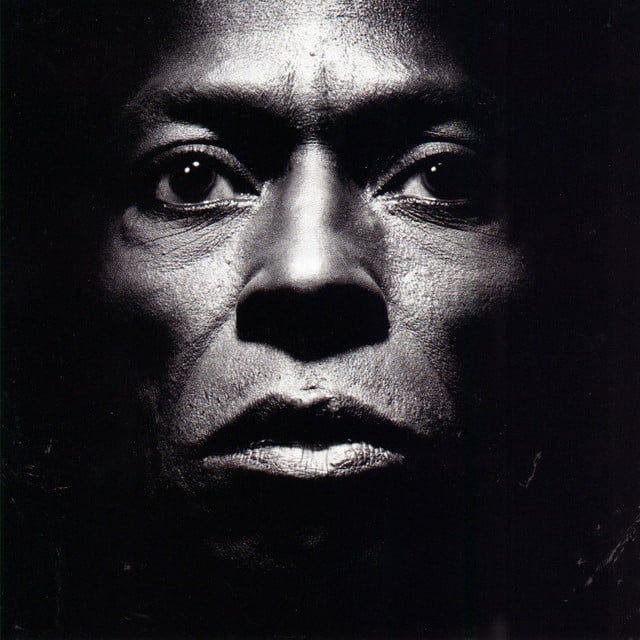
(Miles Davis, Picture cover of Tutu 1986. Photo by Irving Penn)
Of the many musicians I’ve seen play live, one that continues to get nods of recognition, respect and, at times, envy when mentioned is Miles Davis, who was born 100 years ago on 26 May 1926 (he died in 1991).
I saw the trumpet player, band leader and composer play at London’s Royal Festival Hall in July 1985 as part of the Capital Radio Jazz Festival. My recollections of it forty years on are somewhat hazy but they include his frequent habit of playing much of the show with his back to the audience whilst walking around the stage (it is said that he didn’t so much turn his back on the audience as face his fellow musicians in order to hear them better). I also think he performed his cover version of Cyndi Lauper’s Time After Time (it had featured on his You’re Under Arrest album the previous year). I was enthralled.
My introduction to Miles started in the early 1980s, seeing his name on the first albums of Charlie Parker and Max Roach bebop era recordings I bought. I then became familiar with his own classic albums such as the Birth of the Cool compilation of the nonet sessions from 1949-50 and 1959’s ground-breaking masterpiece Kind of Blue (I recommend Richard Williams’ excellent book that explores the album and its wider cultural context and influence).
I also discovered the wonderful collaborations with Gil Evans, Miles Ahead (1957), Porgy and Bess (1959), and Sketches of Spain (1960) with their magnificent orchestral arrangements and Miles’ use of flugel horn with its mellower tone. They remain an essential part of my collection.
I remember buying 1986’s Tutu (named in tribute to Archbishop Desmond Tutu, the South African anti-apartheid and human rights activist) when released, his first album for Warner Bros, with its electronic and funk grooves, with much of the composition, arranging, instrumentation and production done by bassist Marcus Miller.
I can also recall a rare and somewhat awkward live UK TV interview Miles did at the time for Channel 4’s music programme The Tube, promoting a video for Tutu. He talked to Jools Holland about his art (by which I mean his sketches and paintings), saying of one picture, “a girlfriend of mine used to look like that…from the rear”. It’s not any easy watch (you can find it online).
About twenty years later, I was at a stage in my management career where I found a senior organisational leader to mentor me for a bit. At our first meeting I was asked to name my three favourite leaders and explain why. Miles was one of them. I said that not only did he select great teams where the sum was greater than the (considerably outstanding) parts, but that many of his band members developed whilst with him and went on to excel in their own right, often as band leaders themselves (think Herbie Hancock, Keith Jarrett, Dave Holland, Wayne Shorter, for example).
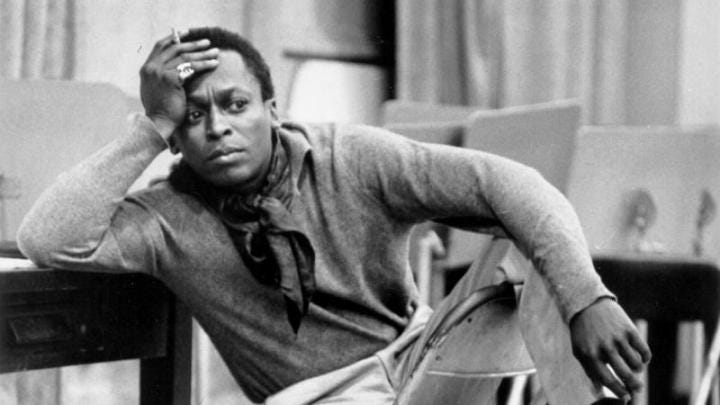
This is all to say that Miles has been a feature of my musical life for some time. So I have been very interested to note the array of things that have understandably been going on to mark Davis’ birth centenary. Live events include a BBC Proms with Ambrose Akinmusire, a celebration with Kamasi Washington and a symphonic Kind of Blue with Guy Barker.
BBC Radio has also been marking it with three very different, but equally fascinating, series of programmes.
The longest and most substantial of these was last week’s ‘Miles Davis 100’ in Composer of the Week from Radio 3. Presented by the excellent Kate Molleson, joined by American jazz critic and historian Nate Chinen, over five hour-long episodes they consider and explore Miles’ life and work from his early days in the bebop scene, the 1950s ‘First Great Quintet’ (featuring John Coltrane), the Gil Evans collaborations, the landmark Kind of Blue, the ‘Second Great Quintet’ of the 1960s, the electric 1970s and the 1980s electronic funk and pop. It’s a fabulous presentation of how Miles was always pushing forward in his music, often against social and cultural barriers. As well as playing considerable chunks of music (not always the most familiar tunes, a good decision in my view), there is considered and informative story telling and analysis from Molleson and Chinen. This includes Miles’ periodic episodes of drug addiction, his experiences of racism and his own abusive behaviour, not least towards women.
There is less music played but sharp analysis in Kevin Le Gendre’s very personal Miles Beyond as part of Radio 3’s The Essay series. This consists of five 15 minute episodes which in turn consider Davis’ political life, his expansion of the trumpet as an instrument, his use of new technology, his image and style, and his handling of popular music (from the Great American Songbook to pop hits of the 1980s). I have written before of Le Gendre’s outstanding insight and analysis, but he also has a beautiful way with words and delivery. His description of Davis’ use of the Harmon mute and studio microphone such that he was able to “create intimacy, a sense of whispering secrets” is but one example.
Finally, on Radio 4, the latest Legend series is The Miles Davis Story as told by actor and long-time fan Clark Peters. At the time of writing only two of the five 30 minute episodes have been broadcast, dealing with Davis’ arrival in New York aged 18 and his first slide into a drug habit (the series’ notes claim it will grapple “with the darker side of Miles’ legacy”). The mix of archival recordings, clips of music and interviews, as well as Peters’ distinctive story telling is promising.
These are all absorbing and enjoyable radio shows for long established fans and newcomers alike. Each in their own way conveying the sheer depth, range and beauty of the music but not glossing over Davis’ unpleasant and difficult side (although it must be said that there is also recognition of his generosity to fellow musicians and collaborators).
Miles won’t be the first - or the last - maker of exquisite music with personality flaws. I’m not sure he’s someone I would have liked to have met, but I’m really glad I got to see him play and he will always be somebody that I will listen to.
Miles Davis 100 (Composer of the Week), Miles Beyond (The Essay) and The Miles Davis Story (Legend) are all available on BBC Sounds.
We were talking about this the other day, that tension between the artist's character, especially the parts we dislike, and the artwork. Interesting reflections, John.